
























Up in Smoke: What the Boyle Heights Fire Reveals About Hidden Industrial Vulnerabilities

The 500,000-Square-Foot Nightmare: A Grim Reality Check for Supply Chains

The devastating multi-day blaze at a massive cold storage warehouse in Boyle Heights has highlighted the evolving dangers embedded within modern supply-chain infrastructure. As reported by KTLA, the fire tore through a 500,000-square-foot facility, compromising interior industrial refrigeration lines and triggering widespread hazardous air quality advisories. When high-tech industrial assets mix with complex chemicals, standard safety protocols are no longer sufficient to prevent catastrophe. Protecting commercial assets and surrounding communities requires shifting toward integrated, data-driven security frameworks. Industrial operators must proactively adapt their defensive strategies before a minor localized failure spirals into a multi-million-dollar regional crisis.

Cracking the Risk Code: Moving from Guesswork to Predictive QRM Data

Industrial operations are expanding in size and complexity, introducing hidden vulnerabilities that traditional, generalized safety checklists often fail to catch. When a crisis strikes, response teams frequently find themselves bogged down by complex, multi-layered hazards and the operational chaos of switching between fragmented tools.

The necessity of a more objective, quantitative risk management approach becomes undeniable when reviewing how rapidly an accident overwhelms emergency infrastructure. For instance, as reported by The Guardian, the compounding environmental hazards of the recent Boyle Heights incident forced leaders to declare a state of emergency. The fire burned for over three days, sending thick, toxic plumes across the Los Angeles basin.

To combat these threats, facilities turn to the QRM platform. Rather than guessing, it uses numerical data, historical incident frequencies, and predictive modeling to calculate the precise mathematical probability of asset failures beforehand. By quantifying these worst-case scenario impacts, organizations can seamlessly allocate budgets, preserve business continuity, and coordinate multi-agency alerts.

Cutting Through the Chaos: Deploying SiSA™ to Unify Disconnected Crisis Channels

While a QRM framework provides the high-level predictive data, managing a live incident requires an instant, mass-alerting infrastructure. In high-stakes environments, relying on disconnected, fragmented tools creates confusion and catastrophic communication delays. This is where the SiSA™ framework transforms emergency coordination. Operating as a unified life safety platform, SiSA™ replaces isolated notification systems with a centralized command architecture. Instead of dispatching manual warnings across scattered channels, an integrated safety layer allows emergency coordinators to deploy multi-channel alerts simultaneously.

When dealing with a sprawling facility layout, mass-alert flexibility is vital. Traditional warning systems fail because they lack the ability to tailor messaging to specific threats or locations. As said by LAFD, field operations became incredibly hazardous as crews encountered complex compounding variables, including structural roof collapses, damaged interior product racks, and the off-gassing of industrial materials. Firefighters faced a logistical nightmare as the building’s massive, heavily insulated freezer walls buckled inward, trapping pockets of intense heat underneath tons of corrugated steel and thousands of pounds of compromised commercial food inventory.

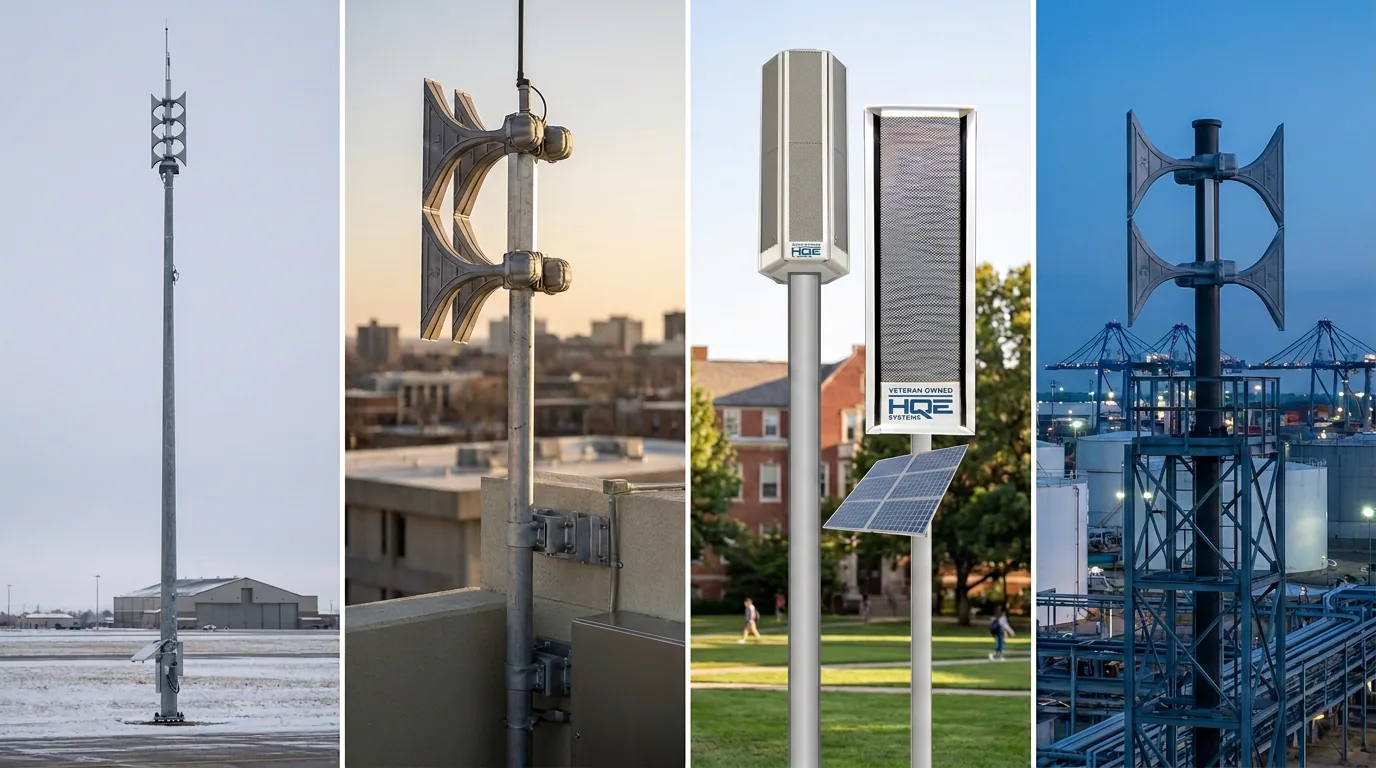
Under an integrated SiSA™ setup, managers use a centralized dashboard to instantly push targeted visual and audio alerts across specific zones, facility desktop monitors, outdoor sirens, and personal devices. This ensures that area-specific hazards are communicated explicitly to the right teams without causing widespread panic in unaffected sectors. Crucially, the platform simultaneously initiates background system health checks to confirm siren delivery status, while a hardwired mesh fallback handles messaging even if primary cellular links dissolve under physical collapse. This eliminates human error during high-stress activations and generates real-time data logs for subsequent federal audits and compliance reviews.

Defeating Noise and Language Barriers: Multi-Channel Alerts When Seconds Count

Modern industrial facilities contain dense infrastructure and diverse workforces, introducing massive accessibility gaps during a crisis. Standard siren networks or simple text alerts cannot account for loud machinery spaces or multilingual demographics. For an emergency protocol to be effective, critical instructions must cut through high-decibel operational noise and language barriers seamlessly.

A resilient safety strategy addresses these communication discrepancies through automated, inclusive delivery systems. For example, as said by Patch, industrial emergency responses can be severely exacerbated by the unexpected presence of lithium-ion industrial batteries and rooftop solar arrays, which hinder traditional firefighting tactics and prolong structural hazards. Because the commercial solar panels on the Boyle Heights facility remained energized by daylight even as the roof collapsed, emergency crews could not safely step onto the structure to vent the heat, forcing a purely defensive exterior attack. During fluid crises like this, utilizing architecture like SiSA™ allows administrators to deploy pre-built templates for common emergency scenarios in over 108 life-like foreign languages. By broadcasting synchronized voice calls, SMS messages, and digital signage alerts to all workstations simultaneously, facilities ensure that internal personnel and third-party contractors receive immediate, actionable directions regardless of their location or language.


Beyond the Compliance Checklist: Cultivating a Bulletproof Safety Culture

Managing the complex safety risks of modern industrial facilities demands an unshakeable commitment to real-time awareness and proactive physical site management. The severe disruptions seen across Los Angeles neighborhoods emphasize that legacy checklist security cannot withstand modern industrial hazards. By combining predictive Quantitative Risk Management parameters with the rigorous, multi-channel capabilities of the SiSA™ platform, operations can eliminate communication blind spots before disasters strike. Ultimately, achieving true resilience is not about purchasing a quick fix or checking a compliance box; it requires an active, data-driven culture that adapts as fast as the risks do.

HQE Systems is a certified Veteran Owned Company. For more information about HQE Systems Inc. and its emergency management, electronic security, and integration solutions, please visit www.hqesystems.com.

Contact: David Ditto (Early Warning Systems Subject Matter Expert)

Email: David.Ditto@hqesystems.com

Phone Number: (843) 872-7020

____________________

HQE Systems, Inc.   |   HQE is a Minority-Owned Service Disabled Veteran Owned Small Business (SDVOSB) providing full solutions for: Mass Notification Systems, Electronic Security Systems, Software Development Services, Contract Support, and Prototyping Services.  As a brand-agnostic solutions provider, HQE prides itself in providing the BEST solution for the project.  HQE possesses over 30+ factory certifications and reseller licenses to ensure our clients receive the highest quality service at the ideal budget.  HQE can provide full design, installation, integrations, upgrades, and long-term maintenance support for any size and scope project.

www.HQESystems.com