As the U.S. prepares to build the Golden Dome missile defense system, it’s clear: the strategy must combine the technical expertise of major defense contractors with the deployment power of local, SBA-backed small businesses across all 50 states and U.S. territories. This is not just a matter of policy; it’s a matter of practicality, national security, and economic opportunity.
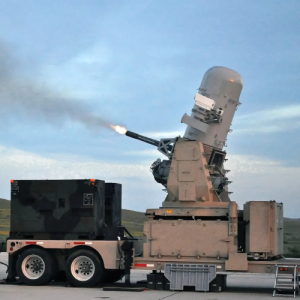
When U.S. troops in Iraq and Afghanistan were under daily threat from rocket and mortar attacks, the Pentagon didn’t wait for something hypothetical; it built and deployed a working solution, C-RAM: Counter-Rocket, Artillery, and Mortar.
The concept was simple:
SENSE the threat.
WARN those in danger.
INTERCEPT the projectile.
The real breakthrough wasn’t in the kinetic intercept, it was in the “Warn” layer: a multi-channel emergency alert system that gave troops the precious seconds they needed to take cover. Using radar, outdoor sirens, strobe lights, loudspeaker voice commands, and digital messaging, this system proved the value of early warning.
C-RAM worked. Its core principles remain relevant, and many of its subsystems have evolved into commercially available technologies.
Today, major defense firms such as L3Harris, SpaceX, Palantir, Raytheon (RTX), Lockheed Martin, Leonardo DRS, and Anduril Industries are reportedly being tapped to develop components of the emerging Golden Dome homeland defense architecture. Their expertise in long-range sensing, artificial intelligence, space surveillance, and kinetic interception is essential to establishing a strategic framework.
But no matter how sophisticated the top-tier technologies may be, they are only as effective as the last mile of execution. The truth is clear:
No national missile warning or response system can succeed without ground-level deployment, training, and sustainment. That last mile belongs to America’s small businesses, and the agency best positioned to coordinate and enable them is the Small Business Administration (SBA).
Across the U.S., thousands of high-performing small businesses already possess the capabilities to deliver this critical infrastructure. Many are certified under the Service-Disabled Veteran-Owned Small Business (SDVOSB), 8(a), HUBZone, and Women-Owned Small Business (WOSB) programs.
These firms:
These businesses are faster to mobilize, deeply embedded in local jurisdictions, and significantly more cost-effective than large primes for regional deployments.
Without their inclusion, the Golden Dome will face delays, uneven coverage, and fractured support across jurisdictions. With them, it can be implemented in less than three years, while simultaneously creating tens of thousands of jobs.
Execution is one part of the equation. Funding is the other. To build a truly Made-in-America homeland defense network, federal investment must flow not only to top-tier integrators but also to the local small businesses responsible for installing, maintaining, and adapting the system to meet regional requirements.
The SBA already operates several powerful contracting and grant pathways to do exactly that:
With Presidential-level direction, these channels can be synchronized into a focused initiative, transforming the Golden Dome into a national economic stimulus while delivering rapid, resilient homeland protection. It’s not just defense, it’s economic development, veteran empowerment, and community resilience.
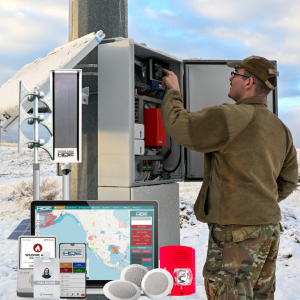
One example of small business readiness is HQE Systems, founded by Qais Alkurdi, a former DoD engineer directly involved in designing the “Warn” layer of the C-RAM system. A certified Service-Disabled Veteran-Owned Small Business, HQE has since delivered advanced mass notification solutions to military bases, colleges, cities, and critical infrastructure facilities across the country.
Their platform, SiRcom SMART Alert System (SiSA), is FEMA IPAWS-certified and fully operational. It includes:
HQE Systems is just one of hundreds of SBA-certified companies already delivering similar capabilities, and ready to serve on the front lines of the Golden Dome rollout.
National security doesn’t end with satellites and sensors, it succeeds or fails based on what happens in cities, counties, ports, schools, and neighborhoods.
Every system must be installed, tested, calibrated, and updated. Every alert must be localized for terrain, climate, language, and cultural relevance. Every system failure must be quickly identified and resolved.
That cannot happen from a federal office or corporate headquarters. It must happen on the ground. In every jurisdiction. By teams that understand their community.
Only the SBA’s small business network is equipped to do this at scale. This isn’t theory, it’s already happening. The question now is whether we will fund it to meet the national need.

The contributions of L3Harris, SpaceX, Lockheed Martin, RTX, Palantir, and Anduril are essential. But their work alone is not enough.
The Golden Dome will only succeed if it is built by a distributed network of small businesses, coordinated and empowered through the SBA, and fully funded to protect every state and territory, not just from threat, but from economic stagnation.
With Presidential support, the SBA can:
This is not just about defending America. It’s about rebuilding it, through trusted partnerships, proven technology, and the entrepreneurial spirit that has always powered this country forward.
The Golden Dome is our shield.
Small businesses, activated through the SBA, are its foundation.

Contact: Alex Carrasco (Early Warning Systems Subject Matter Expert)
Email: Alex.Carrasco@hqesystems.com
Phone Number: (808)-348-9534